
How the descent is arranged
Falling Pickaxe mechanics: hit reserve, ore and special cells
Falling Pickaxe mechanics rest on durability. The pickaxe hits blocks until the HP sits at zero. Ore pays, and empty rock only spends hits. TNT, the arrow and the workbench change a path that is already underway.
Contents
- Falling Pickaxe mechanics and zero HP
- A hit in Falling Pickaxe mechanics removes 1 HP
- Pickaxes in Falling Pickaxe mechanics and the hit reserve
- Blocks in Falling Pickaxe mechanics and rewards
- TNT in Falling Pickaxe mechanics
- The upgrade arrow in Falling Pickaxe mechanics
- The workbench in Falling Pickaxe mechanics
- Falling Pickaxe mechanics against crash and mines
- What Falling Pickaxe mechanics do not carry over
- The wide pickaxe in Falling Pickaxe mechanics
- How to read a descent in Falling Pickaxe mechanics
- Hit consumption in Falling Pickaxe mechanics
Falling Pickaxe mechanics and zero HP
In an ordinary slot the round ends when the reels have stopped. In Falling Pickaxe the reel only opens the door. After that, the hit reserve lives on. A heart or a bar on the screen is not decoration. It is the length of the current drop. Zero closes the shaft, and together with it the total closes.
While the HP figure is above zero, the pickaxe is still in the mine. It hits everything that stands in the way, and for every hit it gives up one unit. Dirt, stone, gold, TNT - for the consumption of durability this is one and the same hit. The only difference is whether the block pays on top.
The next launch does not continue a broken remnant. The tool is issued anew, with the full starting reserve of its own type. The model does not hear the feeling "I almost reached the diamond, give me two more hits". Almost does not count.
Low volatility on the Pixmove card does not cancel this mechanism. Low speaks about the spread, not about an empty route being compensated right now. A streak of dirt does not switch a debt on. The overall picture, without taking the cells apart, lies in the Falling Pickaxe review.
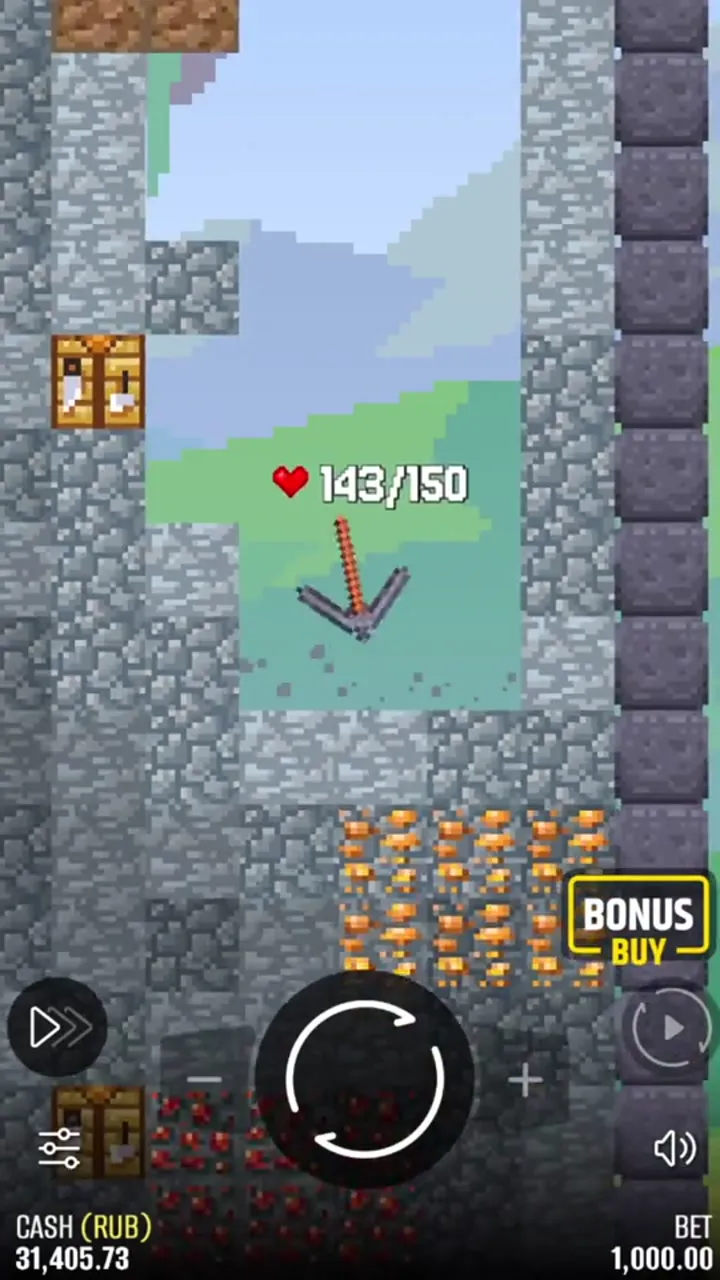
The HP bar in Falling Pickaxe mechanics
It is easy to read HP as the lives of a character you are steering. You are not steering a character. The bar belongs to the tool of this one descent.
When it has sat at zero, the hero did not die anywhere. The drop simply ended, and the next click will start another one.
A hit in Falling Pickaxe mechanics removes 1 HP
The help is built symmetrically. A hit is minus 1 HP for the pickaxe and minus 1 HP for the block. A block with 1 HP disappears at once. A block with 30 HP makes the pickaxe knock thirty times, if nobody cleared it with a blast earlier. Each of those thirty knocks also eats the reserve of the tool.
That is why an emerald is expensive in two ways. It pays x5, but it holds for 30 hits. If, by the moment you meet it, you have 12 HP left, you will not finish it off. The mechanics do not "stretch" the block out of pity. Unfinished stone simply remains, and the round is already closed.
Dirt with 1 HP looks harmless and at the same time steals hits in batches. A long shaft of empty rock can eat the diamond 400 just as honestly as a short contact with hard ore. The length of the mine is a poor measuring stick here.
If the damage step in the open help is different, the help is the one that is correct. This text describes the rules screen, where a hit costs one unit to both sides. The buttons with which this hit is launched are broken down in how to play Falling Pickaxe.
Pickaxes in Falling Pickaxe mechanics and the hit reserve
The reel issues one of four pickaxes, and each has its own ceiling of hits at the start. Wood - 100. Stone - 150. Iron - 200. Diamond - 400. This is not the rarity of the block under your feet. It is only the fuel tank for this trip.
A diamond tank looks like a win even before the first hit. That is a trap for the eye. 400 HP give more collisions, not a better makeup of the shaft. You can travel far across dirt and close out modestly. You can, on wood, run straight into an emerald and close out more handsomely than a long empty pipe.
The reserve does not build up between rounds and is not handed over if you have left the client. Zero nullifies the trip. A new reel can give wood again, even if a moment ago there was a diamond. A run of identical starts owes nothing.
On the frames this is visible in the counter. An almost full diamond at the start and a stone that has already been eaten into are different tanks of one and the same mechanic. Compare the remainder with the type, not with the previous round. For the bar, the previous round does not exist.
| Pickaxe | Starting HP |
|---|---|
| Wooden | 100 |
| Stone | 150 |
| Iron | 200 |
| Diamond | 400 |
The wooden pickaxe in Falling Pickaxe mechanics
100 HP is enough to finish off several soft blocks and, if the route is lucky, to graze a valuable cell. It is not enough to promise depth.
Do not raise the stake only because wood has come up again. The type of the pickaxe and the stake size are not linked.
Blocks in Falling Pickaxe mechanics and rewards
The Pixmove card names copper, gold, diamond and emerald. The help adds dirt, stone and redstone with concrete numbers. Dirt and stone - 1 HP and zero reward. Copper - 5 HP and x0.01. Redstone - 10 and x0.05. Gold - 15 and x0.2. Diamond - 20 and x1. Emerald - 30 and x5.
Two descents of one and the same length can therefore be worth different amounts. One is made entirely of dirt. The second clipped gold and emerald. There is nothing to count efficiency by whose frame sits lower. Look at the label on the cell.
The x1 of a diamond and the x5 of an emerald are shares of the stake for a destroyed block. Not the round ceiling. The card ceiling of x160 covers the entire descent as a whole. Depth that "looks like a huge multiplier" does not raise this ceiling.
The table below is taken from the rules screens. If your build has diverged from it, the build is the one that is correct. With a studying eye the same thing can be checked in the Falling Pickaxe demo, while the chips cost nothing.
| Block | HP | Reward from the stake |
|---|---|---|
| Dirt and stone | 1 | none |
| Copper | 5 | x0,01 |
| Redstone | 10 | x0,05 |
| Gold | 15 | x0,2 |
| Diamond | 20 | x1 |
| Emerald | 30 | x5 |
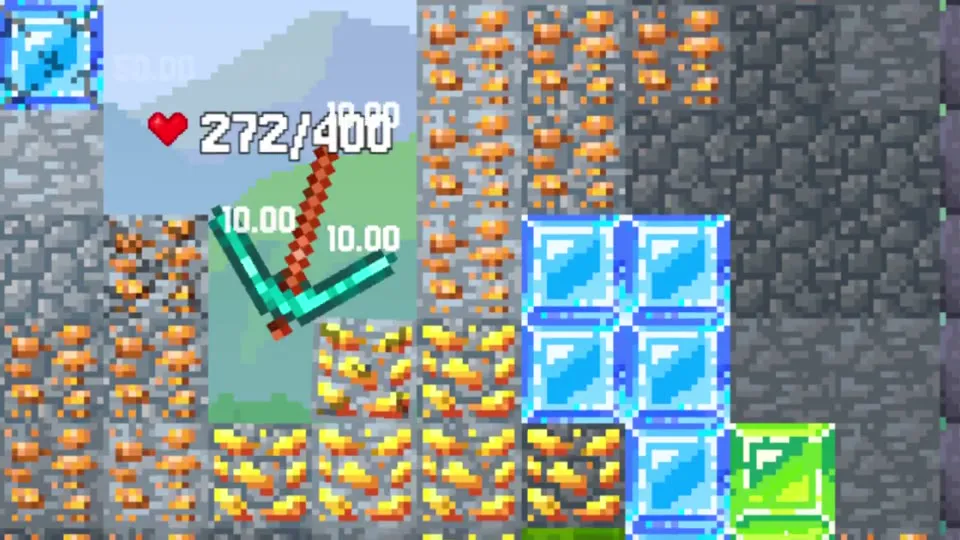
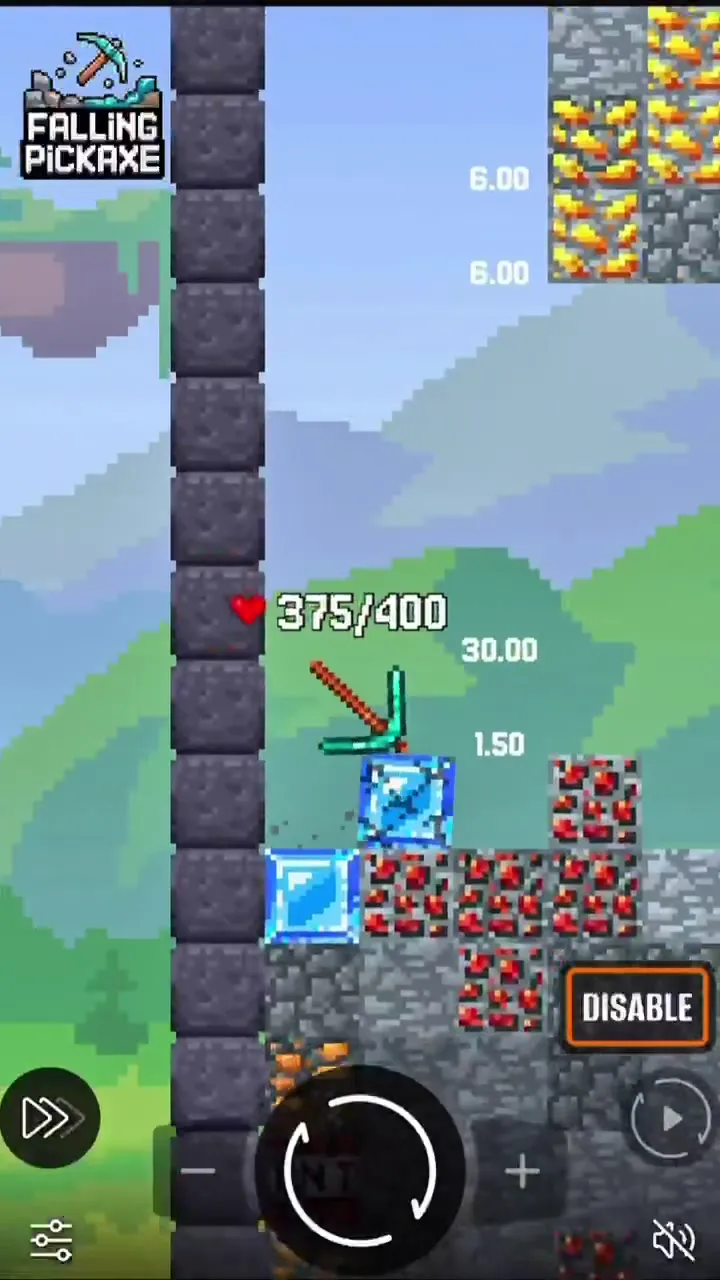
x5 and x160 in Falling Pickaxe mechanics
An emerald can give x5 and at the same time not bring you closer to the ceiling the way it seems on the flash. The ceiling counts the whole round, not one cell.
A large sum on a clip, without the size of the stake, does not prove a multiplier. The sum depends on the stake size.
TNT in Falling Pickaxe mechanics
After it is destroyed, TNT removes blocks within a radius. This is a piece of a descent that is already underway, not a separate wheel and not a mini-slot with its own field. The blast belongs to the current pickaxe. A new game with a new tank does not begin.
The blast does not guarantee a diamond lower down. It can clear both a valuable cell and empty rock. Exactly how the neighbouring cells will be recalculated, the help of your build must say. A general retelling does not replace the frame.
The rules do not describe raising the stake so that TNT lands more often. There is no such setting. The charge either stands on the route, or it does not stand there. Five rounds without a blast do not break the mechanics.
There is no separate button to call TNT. It is a cell, like gold. You do not aim at it. The pickaxe either crashes into it or passes by it, because the round sets the course.
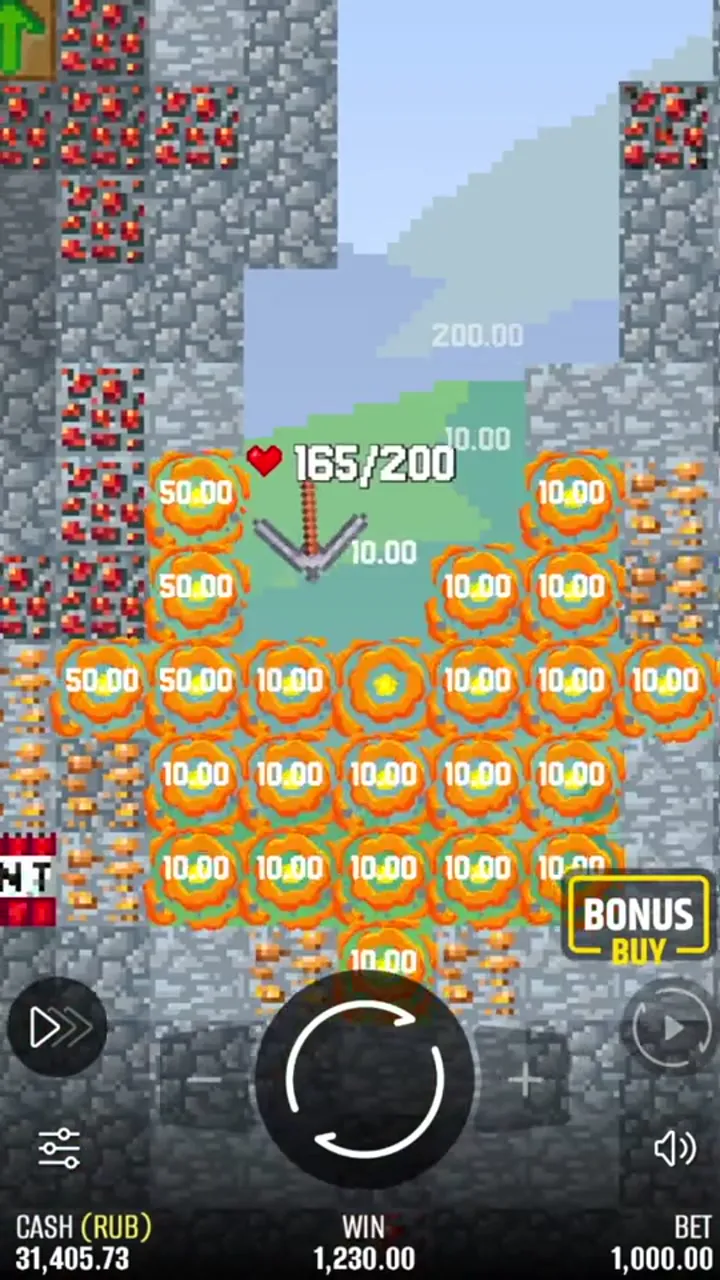
The TNT blast in Falling Pickaxe mechanics
After the flash it is easy to expect that a chest has opened. What opened is a radius. Inside the radius there can be dirt.
Do not read TNT as a bonus you buy. On the card there is no price for a purchase of that kind.
The upgrade arrow in Falling Pickaxe mechanics
The upgrade arrow makes the tool wider for a time. The first hit takes it up to a size of 1.5. If, during the effect, you crash into the arrow again, the width reaches 2, then 2.5. The steps do not jump over one from a single touch.
A wider corridor means more cells across the same seconds of the fall. Among those cells there can again be empty rock. The coverage has grown, the RTP has not. The 95% on the card is not rewritten by the width of the pickaxe.
The effect is temporary. It does not remain for the next session and it is not described as an item in the inventory. The drop has ended, and the wide pickaxe has ended with it. A new launch starts again at the ordinary size, whatever arrow there may have been yesterday.
Waiting for the arrow on every third spin is pointless. It has no schedule, just as TNT has none. The mechanics are event-based. The event either turned up on the path, or you did not see it in this tank.
The workbench in Falling Pickaxe mechanics
The workbench does two things, and it is easy to glue them into one. It fully restores HP. And it can raise the level along the ladder of wood, stone, iron, diamond. A full tank after the workbench is again the starting number of the already new type, if the type has had time to change.
If the pickaxe is already diamond, there is nowhere to raise it. The workbench only repairs the reserve. 400 does not become 800. The help does not draw a ceiling above diamond.
It is the workbench that explains the phrase that a wooden pickaxe, in one spin, can reach diamond level. The word "can" is mechanical. A chain of hits inside this same drop is required. If it did not turn up, the wood will stay wood all the way to zero.
The help does not promise a carry-over of the level until tomorrow. While the rules screen stays silent about an inventory between sessions, I do not write that carry-over in. The next reel again decides the start by itself.
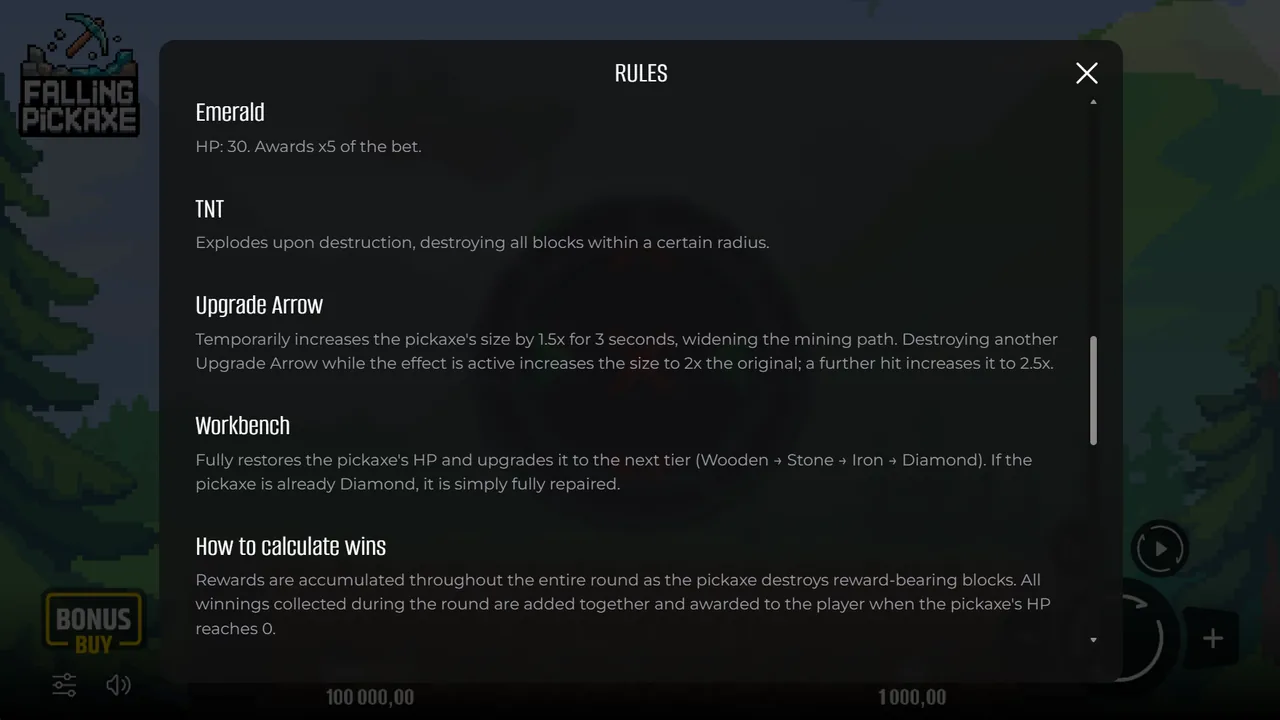
Repair and upgrade in Falling Pickaxe mechanics
You can receive a full tank and stay on the same type. That is a repair. An upgrade is a step along the ladder, and it is not obliged to happen on that same touch in the way you want.
Read both effects separately. Otherwise a diamond pickaxe that was only repaired seems like "one more level", which does not exist.
Falling Pickaxe mechanics against crash and mines
It is useless to measure Falling Pickaxe mechanics by the reels of the big studios. The round there is different, and the bonuses are different. Short formats are closer, and even they are assembled in another way.
In crash the mechanism is a growing multiplier and your decision of when to cash out. A miss on timing often zeroes the round. In mines the mechanism is the cells that you open yourself, and the stop that you choose. A mistake on a cell ends the round. In Minedrop there is usually a grid on top plus a field of blocks. Shared pixel ore does not merge the rules.
Here the mechanism is one. A tank of hits, blocks with their own durability, three random objects on the path, and a result at zero. There is no exit point and there is no choice of cell. The tension is in whether the tank will last until the hard ore, and not in whether you will be in time to press.
I do not put someone else's RTP into the comparison. Crash and mines have their own cards. They do not make this durability any more honest. Look at who runs the round. Read the figure of 95% and the ceiling of x160 in RTP Falling Pickaxe, not in someone else's column.
| Format | Who runs the round | Early cash-out | What to compare |
|---|---|---|---|
| Falling Pickaxe | The pickaxe goes by itself | There is none in the rules | Durability and blocks |
| Crash | The player waits for the multiplier | Usually there is | The moment of exit, not the mine |
| Mines | The player opens the cells | The player stops on their own | A choice of cell, not the drop |
| Minedrop | A different scheme of the round | Does not carry over | Only the picture of the mine |
Ore colour in Falling Pickaxe mechanics
A blue block in another game can be worth something else. A match of the pixel does not carry x1 and x5 across.
Check the name Falling Pickaxe and the Pixmove label, not the palette.
What Falling Pickaxe mechanics do not carry over
There is no cycle of "empty cells first, then a workbench for certain". There is no seed that you carry over from someone else's sandbox. The pixels are shared only to the eye. The help does not describe an inventory for the pickaxe on the next day.
There is no button to aim the tool. There is no button to take the result halfway along the path. There is no schedule for TNT. There is no Buy Bonus price on the card that was used. If a purchase button is present in the client, its terms live there.
There is no compensation for a run of wood. There is no debt for an early break. There is no promise that the wide size from the arrow will survive zero HP. Everything that did not last until the end of the drop is not moved across into the next tank.
This is the rigidity of the mechanics. It is short, and each time it is assembled anew. If you need a memory between rounds, this descent will not give it to you. It gives one tank, one shaft and one total at the end.
- A hit costs 1 HP to the pickaxe and 1 HP to the block.
- Dirt and stone do not pay.
- Emerald holds 30 and is marked as x5.
- The arrow widens in steps of 1.5, then 2 and 2.5.
- The workbench repairs the tank and can raise the type up to diamond.
- The card ceiling is x160 for the whole round.
The wide pickaxe in Falling Pickaxe mechanics
When the arrow has inflated the tool, the eye decides that one pass is now worth several. By the consumption of HP that is not so. A touch of a block still removes one unit from the pickaxe and one unit from the block. Width adds the number of touches per second, and it does not change the price of one touch.
That is why a wide diamond on dirt burns out faster than a narrow one on the same tank, if the corridor is packed with rock. More cells in the frame means more deductions in the same second. Coverage without ore is simply a greedier consumption of the tank.
Set beside this, the workbench looks like the opposite. It does not speed the spending up, it returns the tank and sometimes changes the type. The arrow spends the reserve on a larger front. The workbench restores the reserve. They must not be confused into one "upgrade" button. The help does not mix them either.
If after a wide pass the result is modest, the mechanics have not broken. The front collected dirt. An emerald off to the side of the new corridor stayed off to the side. You do not steer the course any further. Width without ore only empties the tank faster, and this is still the same Falling Pickaxe mechanics, without a hidden second table. Remember this before the next click.
How to read a descent in Falling Pickaxe mechanics
Take one round and lay it out, until you have learned the mechanism. Which pickaxe, and what starting HP. How much was left before a valuable block. Whether the pickaxe finished off that block's durability or sat down earlier. Whether there was a blast, an arrow or a workbench, and whether the tank changed after them.
If you cannot answer, the descent is still a cartoon. Slow the animation down for one pass in the Falling Pickaxe demo or on the minimum stake size that you see. Speeding up hides the symmetry of the hit. On the flash it seems that the total appeared by itself.
Then check the result against the type of the blocks, not against the depth of the frame. And only then decide whether the next click is needed. A limit on the total before a series, not after, as on the page responsible play in Falling Pickaxe. The cells are broken down by the author of the Falling Pickaxe material.
One paragraph, and that is enough about the outline. The text is not a cashier. The stake is accepted by the site you moved to. The mechanics of the drop do not change from this button. Zero HP still closes them.
- Name the type of the pickaxe and the starting HP.
- Catch one hit and see that the minus went to both sides.
- Note whether the block pays, or only eats the reserve.
- If a workbench has turned up, separate the repair and the rise in type.
- At zero, check the total against the blocks, not against the depth.
An unfinished block in Falling Pickaxe mechanics
12 HP against a block on 30 is not "almost x5". It is an unfinished break. The round will close, and the reward of the cell will not arrive.
The mechanics here are dry. Either the durability of the block ran out while the pickaxe was still alive, or it did not.
Hit consumption in Falling Pickaxe mechanics
Falling Pickaxe mechanics rest on the consumption of hits. Every block, even a free one, takes 1 HP from the pickaxe. That is why a route of dirt and stone looks long and brings little, while a short contact with an emerald can be worth more than the whole empty mine.
The arrow and the workbench do not argue with each other. For a few seconds the arrow makes the tool wider. The workbench repairs the reserve and can raise the level. TNT does not enter this pair: it removes a piece of the field, and it does not upgrade the pickaxe.
Not a single object is promised by a schedule. You can go through several descents without a workbench and without a blast. That is not a fault, and it is not a reason to change the stake size. The stake does not make a rare cell mandatory.
The ceiling of x160 applies to the whole round, and not to one block. The x5 on an emerald is the reward for a destroyed block relative to the stake. These two figures stand in different places and do not replace each other.
Frequently asked questions about Falling Pickaxe
Does the pickaxe in Falling Pickaxe break forever?
No. The current descent breaks. The next launch issues the tool anew.
Is TNT mandatory in every round?
No. It is a cell on the route. It may be absent for the whole session.
Does the workbench store a level for tomorrow?
In the help, the effect lives inside the current drop, not between sessions.
Does depth equal the multiplier?
No. The multiplier sits in the block type and in the x160 ceiling, not in how low the pickaxe went.
Where is the button order if the mechanics are already clear?
On the page how to play Falling Pickaxe.